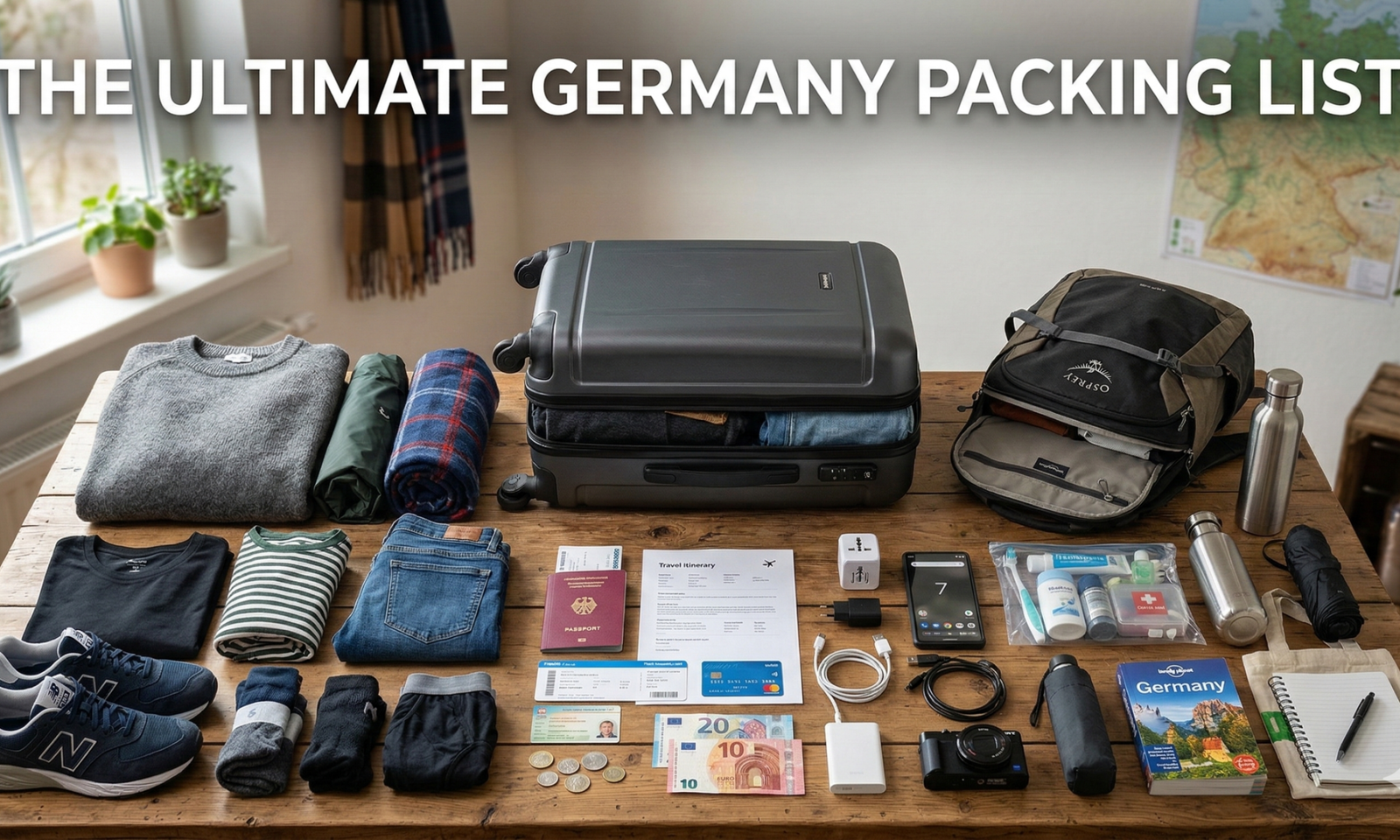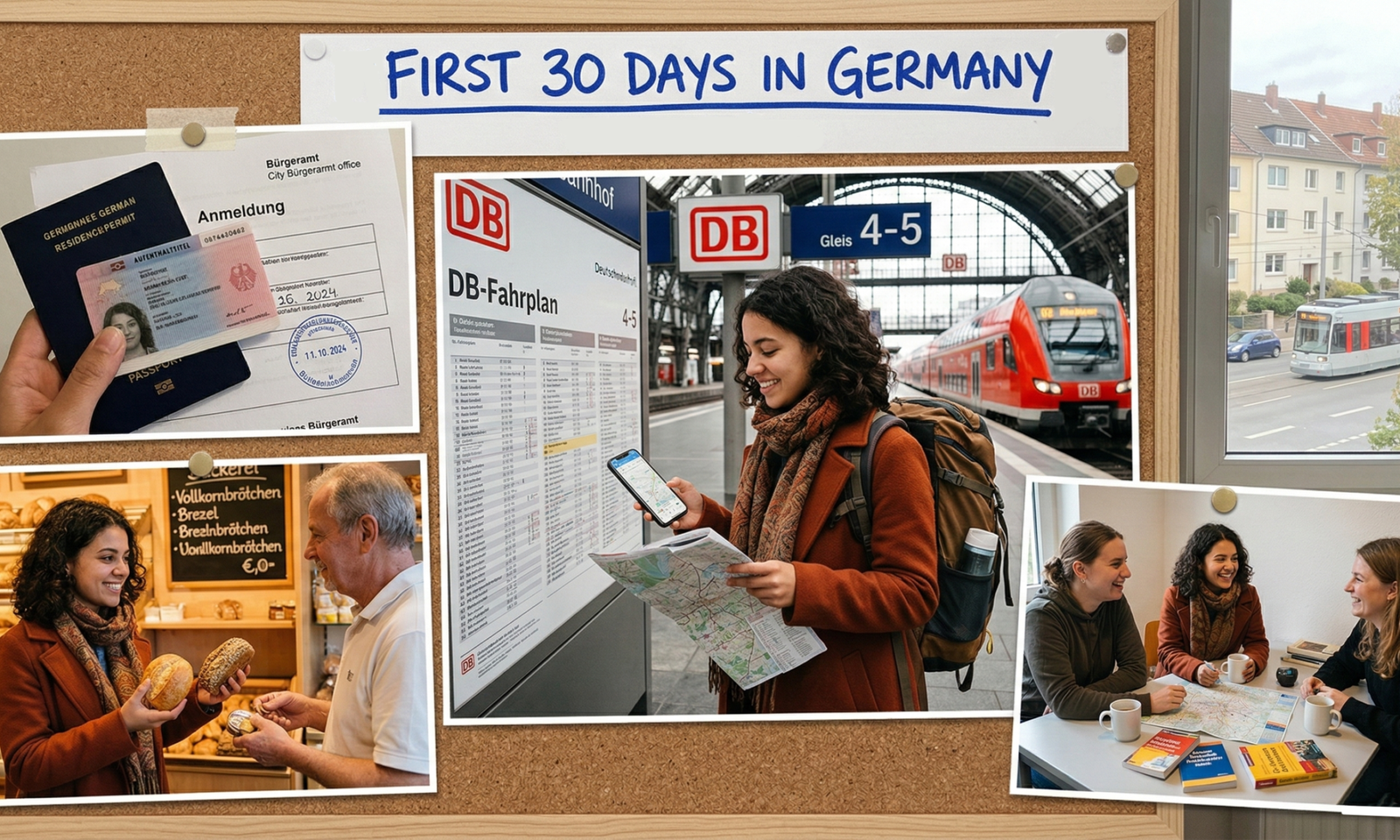
Your Step-by-Step Guide on What to Bring (and What to Leave Behind) for Your Study Abroad Journey.
Introduction
Pack Smart, Travel Light, and Arrive Ready.
Congratulations! You have secured your admission, your visa is stamped, and your German adventure is about to begin. But as your departure date approaches, a major question arises: What exactly do I pack for Germany?
Germany has four distinct seasons, specific bureaucratic requirements, and plenty of local quirks. Overpacking is the most common mistake international students make. This guide is designed to help you pack strategically, save luggage space, and ensure you have everything you need to start your life in Germany without stress.
Let’s get your suitcase sorted.
The “Carry-On Only” Essentials
⚠️ PRO TIP: Never put these items in your checked luggage. If your suitcase gets delayed, you need these documents to enter the country and register your arrival.
Keep these organized in a secure, waterproof travel folder in your cabin bag:
- Your Passport & Valid Visa
- University Documents: Original Letter of Admission, APS Certificate (if applicable), and your original academic transcripts/degree certificates.
- Financial Proof: Your Blocked Account (Sperrkonto) confirmation document.
- Health Insurance: Proof of your German public or private health insurance.
- Travel Insurance: Proof of your Travel insurance.
- Accommodation Proof: Your rental contract or a letter from your host. (If not no problem, just say I have a connect I will stay with him/her until I get my accommodation)
- Biometric Photos: Bring 10-15 passport-sized biometric photos (European standard: 35x45mm). You will need these for your residence permit, transit pass, and student ID.
- Cash: Bring €1500 – €2000 in cash. Germany is still a very cash-loving country, and your international cards might not work at the airport bakery or train ticket machine! Also it will you until your blocked account is not unblocked.
The German Wardrobe (Clothing)
The secret to surviving German weather is layering. Do not fill your suitcase with heavy winter gear—it takes up too much space, and winter clothes bought in Germany are better suited for the local climate.
What to pack:
- The Basics: Underwear, socks, and comfortable daily wear for 2-3 weeks.
- A Light Rainproof Jacket: German weather can be unpredictable. A good windbreaker or raincoat is essential year-round.
- One Heavy Jacket/Sweater: Just enough to survive your first few days if you arrive in autumn or winter. (Plan to buy your main winter coat in Germany).
- Comfortable Walking Shoes: You will be walking and taking public transit a lot. Bring one pair of high-quality, comfortable sneakers.
- Formal Wear: One set of formal clothing (a suit or formal dress) for university presentations or part-time job interviews.
- Traditional Wear: Bring one traditional outfit from your home country! Universities often host international culture nights.
Tech, Gadgets & Adapters
German power outlets use the standard Europlug (Type C and Type F), providing 230V.
- Universal Travel Adapters: Bring at least two high-quality adapters so you can charge your home-country devices immediately.
- Power Bank: Crucial for your travel day and navigating your new city using Google Maps.
- Your Laptop & Chargers: Ensure your laptop is in your carry-on luggage.
- Surge Protector/Extension Board: Pro Tip: Bring one extension board from your home country. You can plug the extension board into your one German adapter, allowing you to charge multiple home-country devices at once!
Health & Comfort
Pharmacies (Apotheken) in Germany are excellent, but they are closed on Sundays, and many common medicines from your home country require a prescription here.
- Prescription Medication: If you take daily medication, bring a 3-to-6 month supply, along with the official prescription translated into English or German.
- Basic First-Aid Kit: Paracetamol, ibuprofen, cold/flu medicine, stomach medicine, and band-aids for those first few weeks.
- Toiletries: Only pack travel-sized bottles of shampoo, toothpaste, and body wash to survive the first week. Why? German drugstores like DM and Rossmann are incredibly cheap, and buying full-sized bottles locally saves massive suitcase weight.
- Spare Eyeglasses: If you wear glasses, bring one or two spare pair. Opticians in Germany can be expensive.
A Taste of Home (Food & Spices)
Don’t panic—almost every medium-to-large German city has excellent Asian, Indian, and international supermarkets. You don’t need to bring 5kg of rice!
- Whole Spices: You can bring small, sealed packets of your favorite whole spices or specific spice blends that might be hard to find.
- Ready-to-Eat Meals: Pack 3 or 4 instant meals (like Maggi or instant poha/upma) for your first few nights when you might be too tired to cook or find a grocery store.
- A Pressure Cooker: If you cook a lot of traditional food, a small (2-3 liter) pressure cooker is highly recommended, as they are expensive in Europe. (Ensure it is induction-friendly!)
What NOT to Bring
Save your luggage weight! Leave these at home:
- Heavy Blankets & Bedding: Buy these at IKEA or local stores in Germany.
- Kitchen Appliances: Blenders or kettles from home might short-circuit due to voltage differences.
- Stationery: Notebooks and pens are cheap in Germany, but bring some for your initial stay.
Arrive with Confidence.